4 annotated examples
Design manager portfolios
A first-line design manager is hired on two proofs at once: that they can still judge craft, and that they can multiply it through other people. Most manager portfolios show only the first, because the case studies were written when the author was still an individual contributor.
The ones that work change the subject of the sentence. They open with scope stated as fact (team size, disciplines, who they partnered with), then describe what they decided, who they grew, and what changed for the team and the product afterwards. A case study about a critique ritual, a hiring bar or an onboarding path counts, and it is rarely confidential.
Manager portfolios are the rarest in this collection, because many managers never rebuild their site after the promotion. If yours still describes projects as if you did the pixels, rewriting the first sentence of each case study is the fastest fix.
What the reader is asking
Can you run a team and still do the work? First-line management is a leader-doer job, and the hiring manager wants evidence of both at once.
4 portfolios
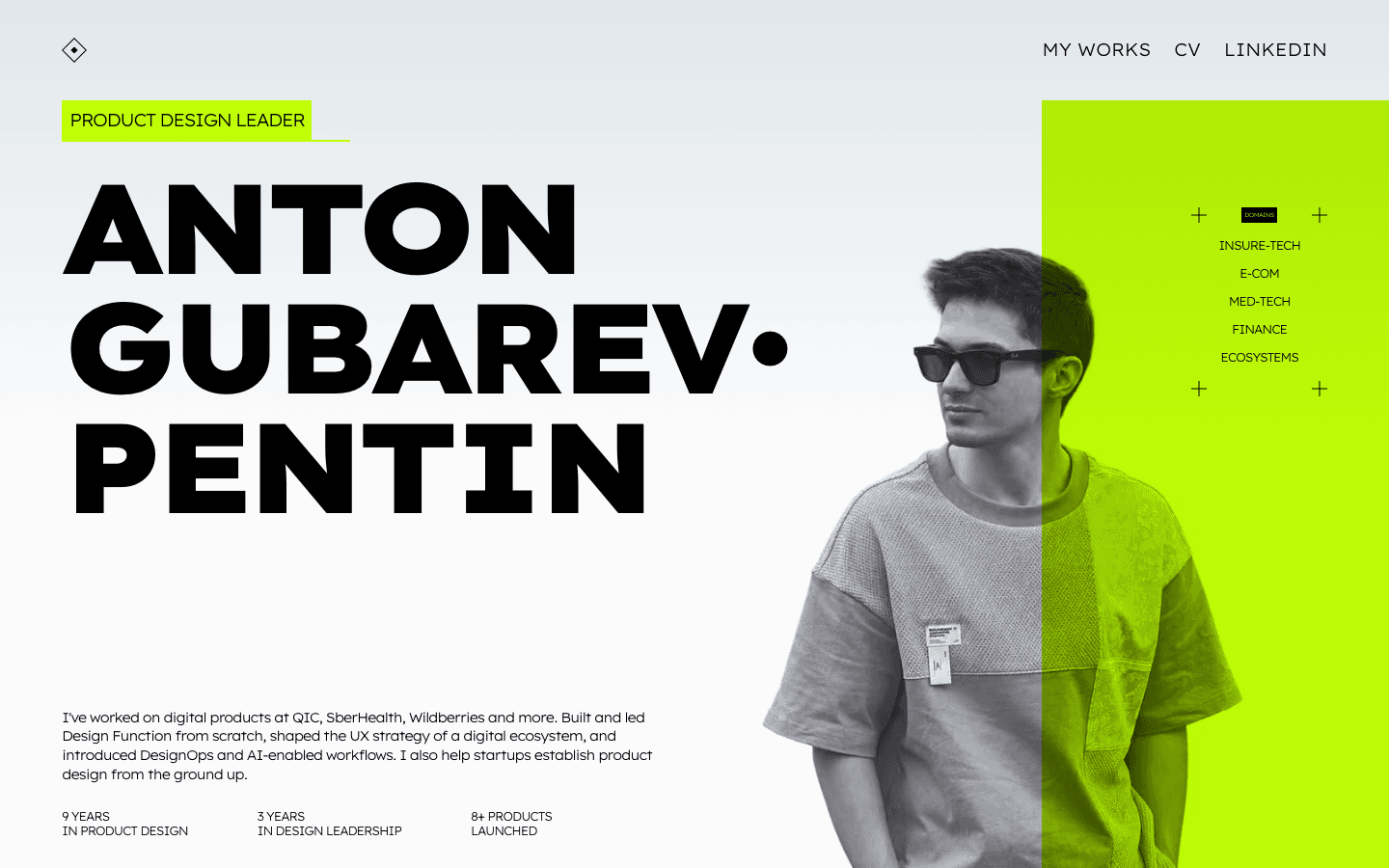
Anton Gubarev-Pentin
Product Design Manager, QIC
Three stages of building a team, each shown with its artifacts.
ManagerEnterprise
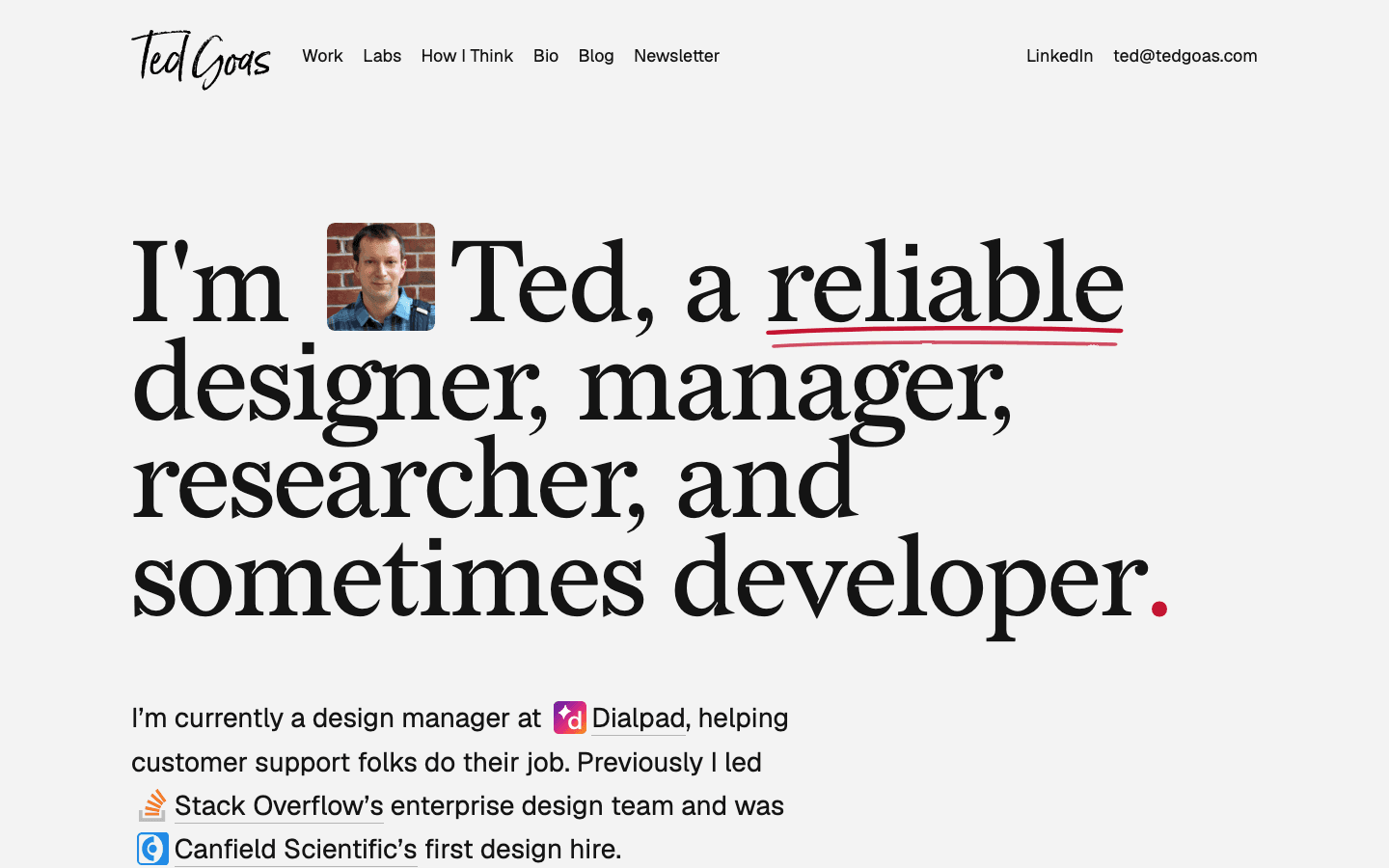
Ted Goas
Design Manager, Dialpad
First designer to manager of eight, told as one arc.
ManagerStartup
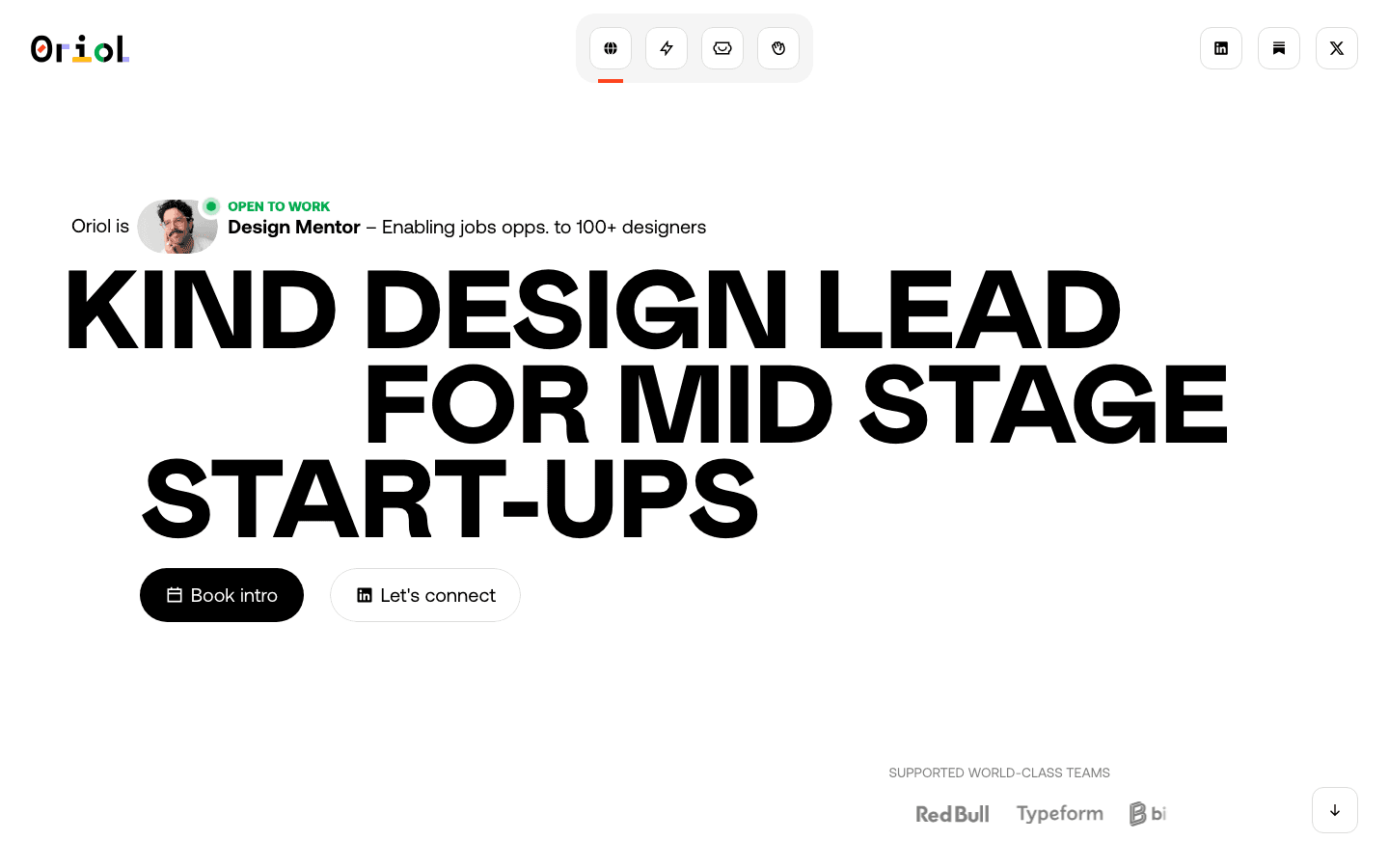
Oriol Bedia
Design Leader
Designer, manager, mentor, each with its own column.
ManagerStartup
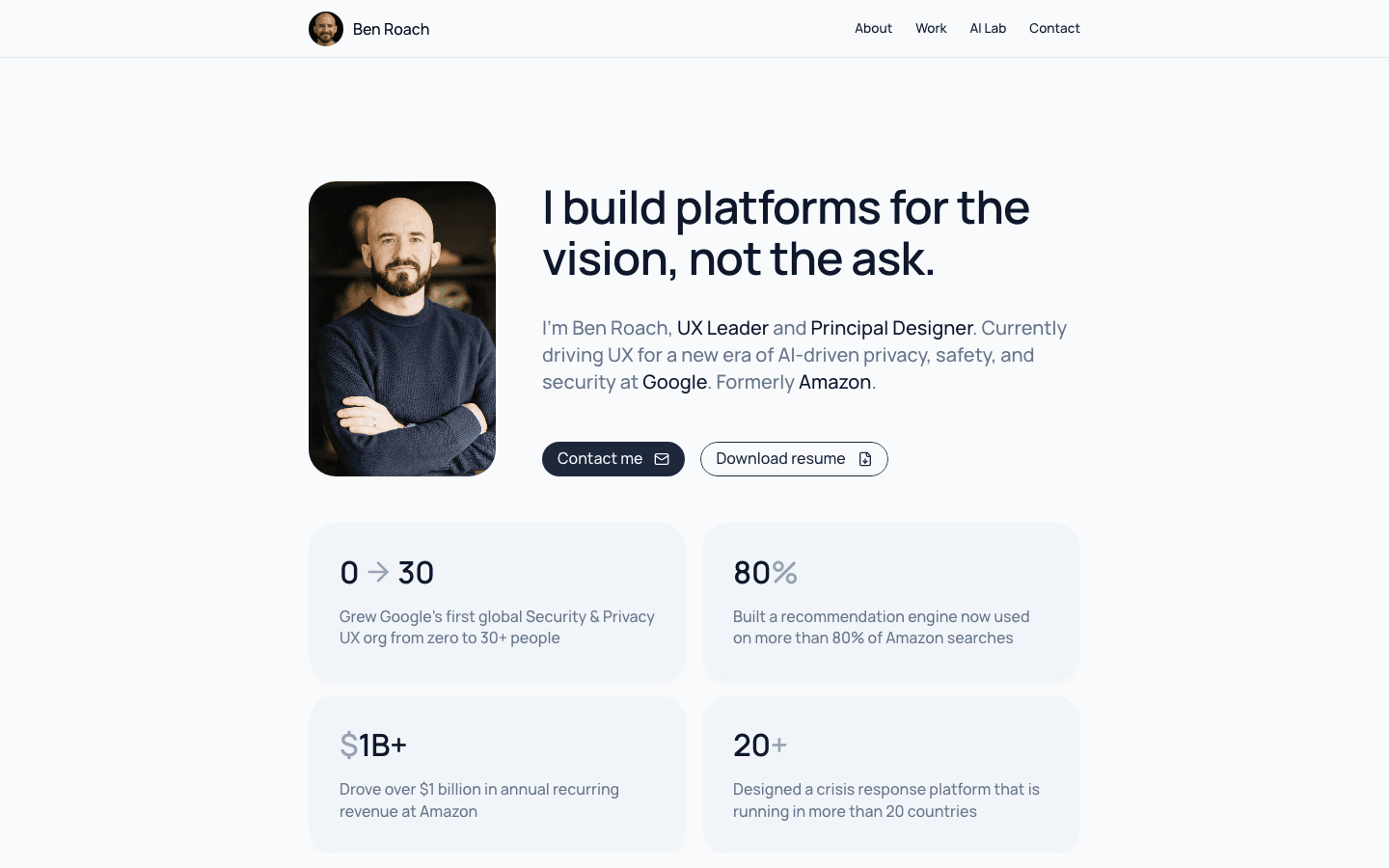
Ben Roach
Senior Staff UX Manager at Google
Leads with numbers that prove leverage, not craft.
ManagerPrincipalBig TechCurator
Other levels
Each level has its own page: what the reader is asking, and every example at that level.
- UX and design director portfolios →13Can you run a business area, not just a team?
- VP of Design portfolios →5Have you run a function, and what changed under you?
- Principal designer portfolios →2Can you raise the bar for people who don't report to you?
- Design founder portfolios →10What did you build, and would I want to build the next thing with you?
- Design executive portfolios →3What do you believe about how design should work inside a company, and can you say it in a way a board would understand?