ExecutiveBig Tech
Mike Davidson
Design Executive leading the largest design team at Microsoft AI; formerly VP of Design, Twitter; founder, Newsvine
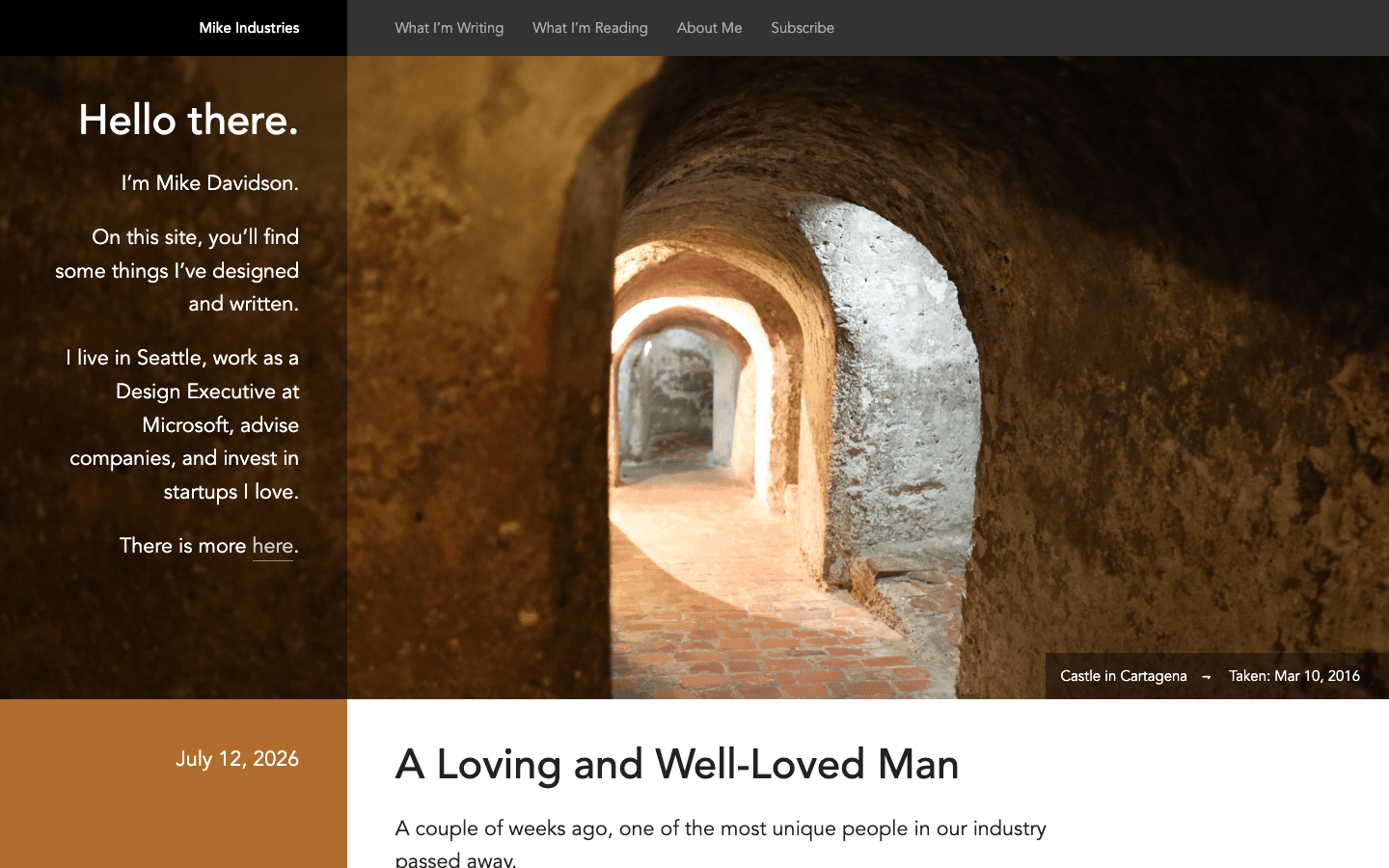
An executive's site that is entirely essays, and the essays are the argument.
What they show
A blog that has run for two decades, now written from the seat of leading design for Microsoft AI. The structure is just 'What I'm Writing', 'What I'm Reading', a bio and RSS. The recent essays lay out an operating philosophy in public: that design is engineering, that the team follows an unbroken chain of excellence from research through prototyping to relentless post-launch refinement, that designers should act as conductors of AI tools rather than assembly-line workers, and that prototypes are the currency that speeds up organizational decisions.
Why it works at this level
This is what a sitting executive's portfolio can be when the products are public but the work inside them isn't: a running record of how he thinks about running a design org at one of the largest companies in the world. The essays aren't thought-leadership in the generic sense; they describe specific operating choices (how the team is structured, what counts as done, what a prototype is for) that a hiring committee or a board would otherwise only get from references. The longevity matters too. A twenty-year archive under one name is a kind of credibility no case study can manufacture.
What to steal
Write down your operating model as a set of short, declarative essays: what you believe about craft, how your team decides things, what a prototype is for in your org. Publish them while you're in the job. Keep the site plain; the writing is the design.
What I'd change
One thing I'd push on. Every site here is good; this is the note I'd send the author.
The About page is excellent (the 100-person team at Twitter, Newsvine, three rules for building design teams) but it sits behind a nav link, and the homepage opens on whatever was posted last. A reader who lands on a recent essay has to go looking for who's talking; a one-line credential under the name would fix it.